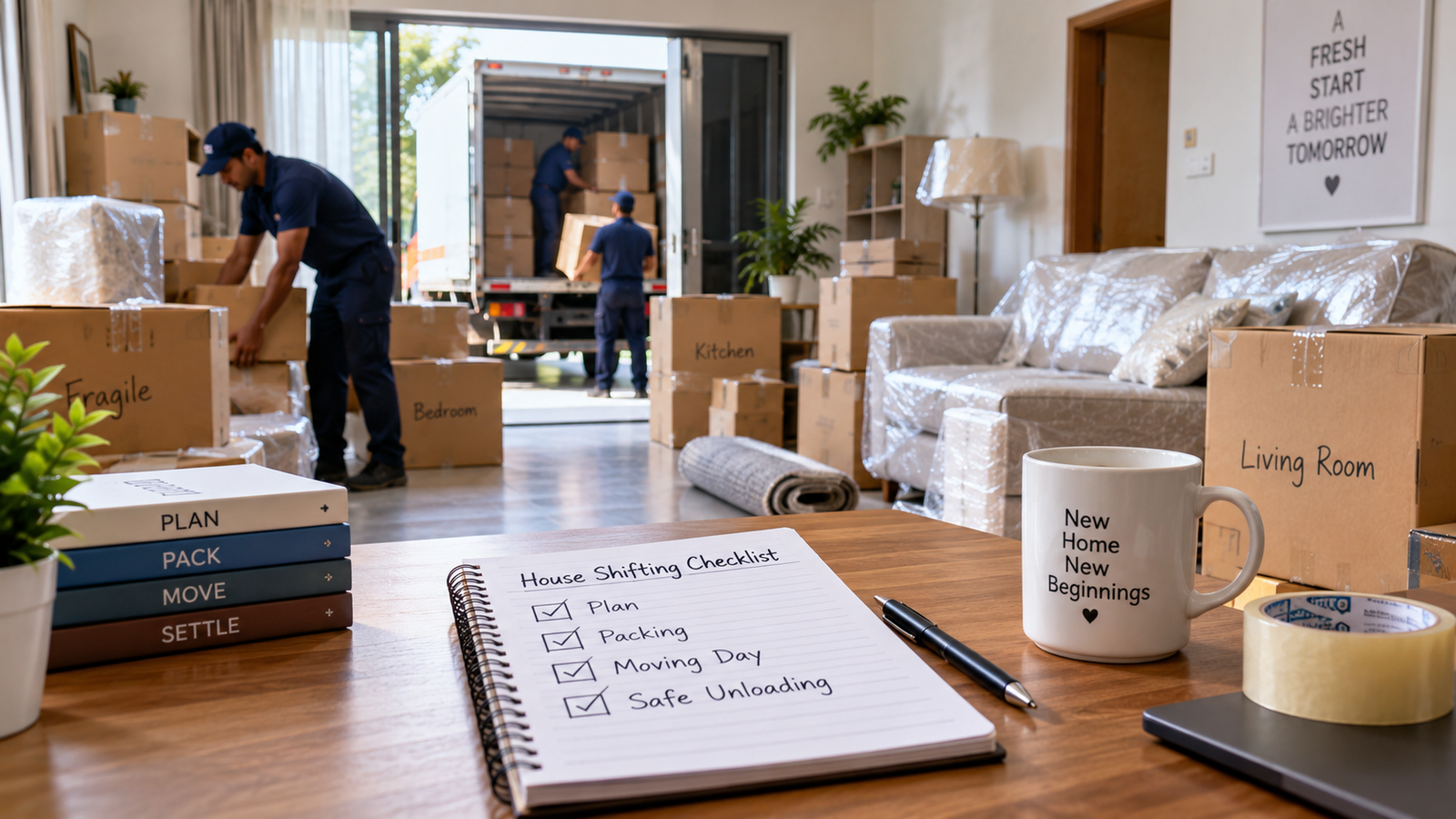
Two to Three Weeks Before the Move
A house shift goes more smoothly when the sorting happens before the packing, not during it. Start by going room by room and separating items into three groups: things you're taking, things you're donating or discarding, and things you're genuinely unsure about. This early sort reduces the number of cartons you'll need and avoids paying to move things you don't actually want at the new address.
This is also the right time to start a basic inventory, especially for higher-value furniture and electronics. A simple list with item name, condition, and a photo is enough — it becomes useful later if you need to check that everything arrived in the same condition it left in.
If you're booking professional packers and movers, this is the stage to confirm the moving date, get a sense of the volume of goods involved, and flag any items that need special handling — a piano, an aquarium, artwork, or heavy furniture that won't fit through a standard doorway.
One Week Before the Move
With sorting done, the week before the move is about narrowing down loose ends. Start using up perishable food so the refrigerator can be defrosted and cleaned a day or two before moving day. Begin packing items you don't need daily — out-of-season clothing, books, decorative items — while leaving essentials for last.
Confirm practical details: parking arrangements for the moving vehicle at both the current and new address, lift booking if you live in an apartment, and building permissions if either society requires advance notice for moving trucks. If you're moving between Bangalore localities, checking traffic patterns on your route can help you and your movers pick a sensible time to start loading.
Set aside a small "first day" bag with medicines, chargers, a change of clothes, basic toiletries, and any documents you'll need immediately — this bag travels with you, not in the moving truck.
Packing Day
On packing day itself, work room by room rather than jumping between rooms — it keeps cartons organised and makes labelling straightforward. Fragile items such as glassware, mirrors, and electronics need bubble wrap or foam padding and should go into their own clearly marked cartons, ideally with 'fragile' written on more than one side of the box.
Label every carton with the room it belongs to and a short note on what's inside — 'Kitchen – utensils and small appliances' is far more useful at unloading time than an unmarked box. If professional packers are handling this step, walk through the home with them beforehand so they know which items need extra care.
Keep valuables — jewellery, cash, important documents, and passports — separate from the general packing and carry them with you personally rather than loading them onto the truck.
Moving Day
On the day itself, be present when loading starts so you can point out any last-minute instructions and confirm the inventory. Heavier items are usually loaded first so the load stays balanced, with fragile cartons secured on top or in a protected section of the vehicle.
If you're moving locally within Bangalore, factor in traffic timing for your specific route — a mid-morning start on a weekday is often smoother than a weekend afternoon in busier localities. For intercity moves, confirm the expected delivery window with your movers so you can plan your arrival at the new city accordingly.
Do a final walkthrough of the old home before the truck leaves — check cupboards, under beds, balconies, and any storage lofts for anything left behind.
After Unloading: The First 48 Hours
At the new address, check the inventory against what's unloaded before the moving team leaves — this is the easiest time to flag anything missing or damaged. Prioritise unpacking the kitchen, bathroom essentials, and bedding first so the home is functional even if other cartons wait a few more days.
Break down and dispose of empty cartons as you go rather than letting them pile up — it keeps the new home usable and reduces clutter while you settle in. Update your address for essential services and deliveries once you've had a day or two to confirm everything has arrived safely.
Frequently Asked Questions
How many days before moving should packing start?
For a full house, starting sorting two to three weeks ahead and packing non-essential items a week before the move gives a comfortable buffer without rushing on the final day.
What should never go inside a moving truck?
Valuables such as jewellery, cash, passports and important documents should always travel with you personally rather than inside the moving vehicle.
Is it necessary to label every single carton?
Yes — clear, room-wise labelling is one of the simplest ways to make unloading and unpacking faster and more organised, especially in a multi-room home.