Choosing the Right Packing Materials
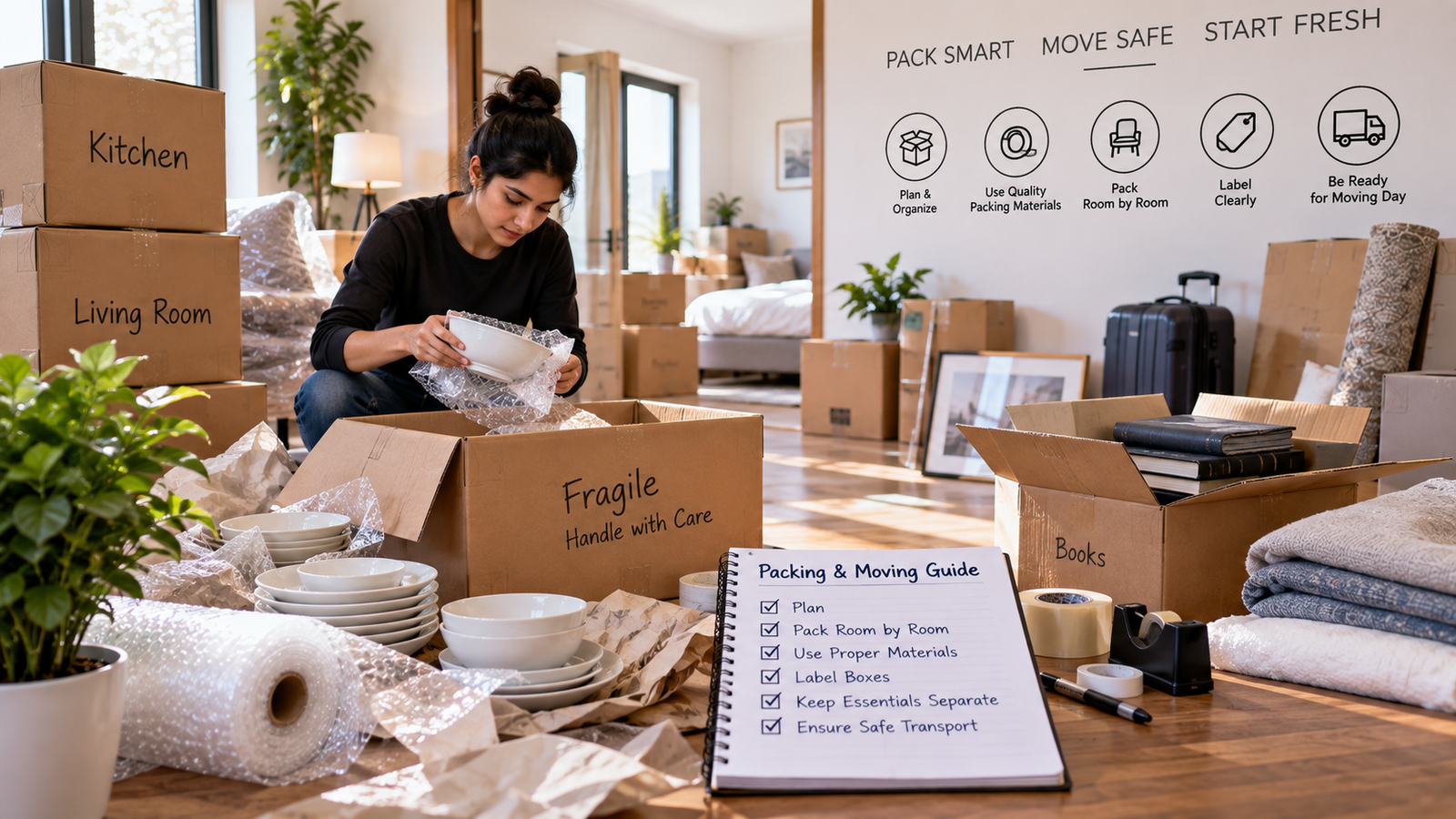
Good packing starts with matching the material to the item, not using one carton size for everything. Sturdy corrugated cartons work well for books, kitchenware and heavier items, but they should be kept small enough that a full box can still be lifted safely. Larger, lighter cartons suit clothing, linens and soft furnishings where weight isn't a concern. Bubble wrap, foam sheets and packing paper are for cushioning fragile items, while stretch film helps secure drawers and doors on furniture during transit.
Packing Fragile and Glass Items
Each fragile item should be wrapped individually in bubble wrap or packing paper before being placed in a carton, with crumpled paper filling any empty space so nothing shifts during transit. Plates pack better standing on their edge rather than stacked flat, and glasses and cups should have paper stuffed inside them for extra support. For larger glass items such as mirrors or tabletops, a flat, rigid layer of cardboard on both sides, secured with tape, adds meaningful protection — and for particularly valuable pieces, a wooden crate is worth considering.
Packing Electronics
Where possible, pack electronics in their original boxes with the original foam inserts — these are designed specifically for that item's shape and weight. If original packaging isn't available, wrap the item in an anti-static bag or bubble wrap and use a snug-fitting box with padding on all sides. Take a photo of cable connections at the back of TVs, routers and set-top boxes before disconnecting them, so reconnecting at the new home is quick rather than guesswork.
Packing and Protecting Furniture
Furniture with removable legs or shelves should be disassembled where practical — it reduces bulk and lowers the risk of the piece being knocked or scratched during loading. Wrap wooden furniture in moving blankets or thick padding at the corners and edges, which take the most impact during transit. Keep the screws and small fittings for disassembled furniture in a labelled bag taped to the item itself, so nothing goes missing before reassembly.
Packing Kitchen Items
Kitchen items combine fragile glassware, heavy cookware and everyday utensils, so it helps to pack them into separate categories rather than one mixed box. Heavy items like cast-iron pans and cookware sets should go into smaller, sturdier cartons to keep the weight manageable, while lighter utensils and plastic containers can share a larger box. Sharp items such as knives should be wrapped individually and clearly marked to avoid injury during unpacking.
Labelling and Loading
Every carton should be labelled with the room it belongs to and a short description of the contents — this single habit does more to speed up unloading than almost anything else. When loading, heavier cartons and furniture generally go in first to form a stable base, with fragile, clearly marked cartons loaded last or in a protected section where they won't be crushed by other items.
Frequently Asked Questions
What's the safest way to pack plates and glasses?
Pack plates standing on their edge rather than stacked flat, wrap each piece individually in packing paper or bubble wrap, and fill empty space in the carton with crumpled paper so nothing shifts in transit.
Should I pack electronics in their original boxes?
Yes, if you still have them — original boxes and foam inserts are shaped specifically for that device and offer better protection than a generic carton.
How do I keep furniture screws from getting lost during a move?
Place screws and small fittings from disassembled furniture into a labelled bag and tape it directly to the furniture piece they belong to.